Getting packages at college without losing them
Two-day delivery is only two-day delivery if the last hundred yards work. On a campus, that is the part that fails.
The short answer
Fast delivery is worth what the last hundred yards allow. On a campus that means mailroom hours, package-room capacity and an address format the courier can actually parse — and none of those are Amazon settings.
It is genuinely common to pay for a delivery membership, receive perfect two-day service to the building, and then wait four days for a mailroom to process it. The membership did its job. The system around it did not.
Find out how your institution actually works
- Where do parcels go? A central mailroom, a hall reception, a locker bank, or your door. These behave completely differently.
- What are the hours? A mailroom open 10am to 4pm on weekdays is the real delivery speed, whatever the tracking says.
- What is the address format? Most institutions publish one. Using it matters more than any delivery option you can select.
- What is not accepted? Perishables, oversized items and anything requiring a signature are the usual exclusions.
Twenty minutes on your institution’s website answers all four and saves a term of confusion. Nothing on Amazon’s side substitutes for it.
The address format problem
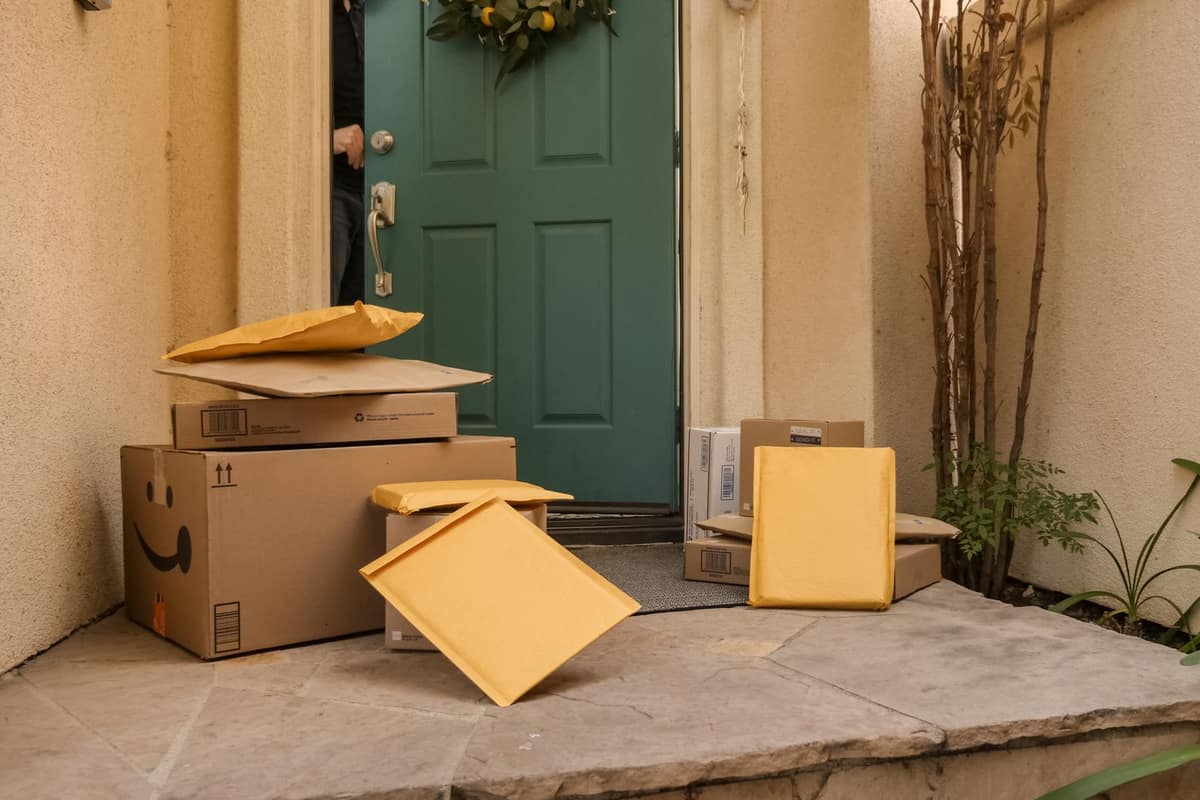
Campus addresses break automated systems in predictable ways: a room number in the wrong field, a hall name a courier reads as a business, a building code that means nothing outside the institution.
Use the format your institution publishes, exactly, including whatever line it says to put your name and room on. If the address field will not fit it, put the room and hall on the second line rather than compressing it into the first.
Lockers, where they exist
Locker pickup solves the mailroom-hours problem entirely, because the locker is open when you are. Where a locker is available near campus it is usually a better default than delivery to a hall, even though it feels like more effort.
The trade is a short walk against a delivery you can collect at 11pm on a Sunday. For a student timetable that is usually the right trade.
| Destination | Speed you experience | Main failure mode |
|---|---|---|
| Hall mailroom | Tracking speed plus processing time | Opening hours, and queues in the first weeks of term. |
| Package room / locker bank on site | Close to tracking speed | Capacity limits, and holding periods that expire. |
| Locker pickup off site | Tracking speed, collected when you like | Availability near campus, and a collection deadline. |
| Direct to door | Fastest where it works | Access control - couriers often cannot get in. |
Timing, which matters more than any of this
The first two weeks of term are the worst possible time to rely on campus logistics. Every mailroom in the country is processing several times its normal volume, and a two-day delivery becomes a five-day one for reasons nobody controls.
So order the things you know you need before that window, and delay anything room-dependent until after it. That is the same principle as not buying dorm furniture before seeing the room, applied to timing rather than to spending.
What this means for the membership decision
If your last hundred yards are slow, delivery speed is worth less to you than the marketing suggests — and delivery speed is the benefit that usually justifies the membership. Judge it on your real experience rather than the advertised one. The break-even, worked.
Grocery delivery has a sharper version of the same problem: it is available in select cities only, and perishables are exactly what a mailroom cannot hold. Check your address before counting that benefit.
The habits that prevent the common failures
- Never let anything need a signature unless you know you can be there. A signature requirement on a campus address is the single most reliable way to have a parcel returned to sender.
- Collect within a day or two. Package rooms and lockers hold items for a limited period and then return them. The holding period is the deadline nobody tells you about.
- Keep the tracking number until the item is in your hands. Mailroom queries are much faster with one and often impossible without.
- Do not ship anything valuable to a shared entrance. If the only option is a doorstep in a building with communal access, choose a locker instead even if it is less convenient.
Where to send things between terms
The other predictable failure is address drift. You order to a hall in April, move out in June, and something ships in July to a room that is now someone else’s.
Two things prevent it. Change your default delivery address the week you move, rather than the first time it matters. And check the shipping address on anything with a delayed dispatch date — pre-orders and back-orders are where this bites, because the address was correct when you placed the order.
If you are heading into a summer where you will not use deliveries much, that is also a natural moment to look at whether a membership is still earning its place, or whether it should start again in September. The termly subscription check, and where to find your renewal date.
Prime for Young Adults
Ready to start?
Six months at no cost, then half the regular Prime price. Cancel anytime.
#ad — this is a tagged Amazon link. If you sign up through it we may earn a flat referral fee, at no cost to you. How this site is funded.